
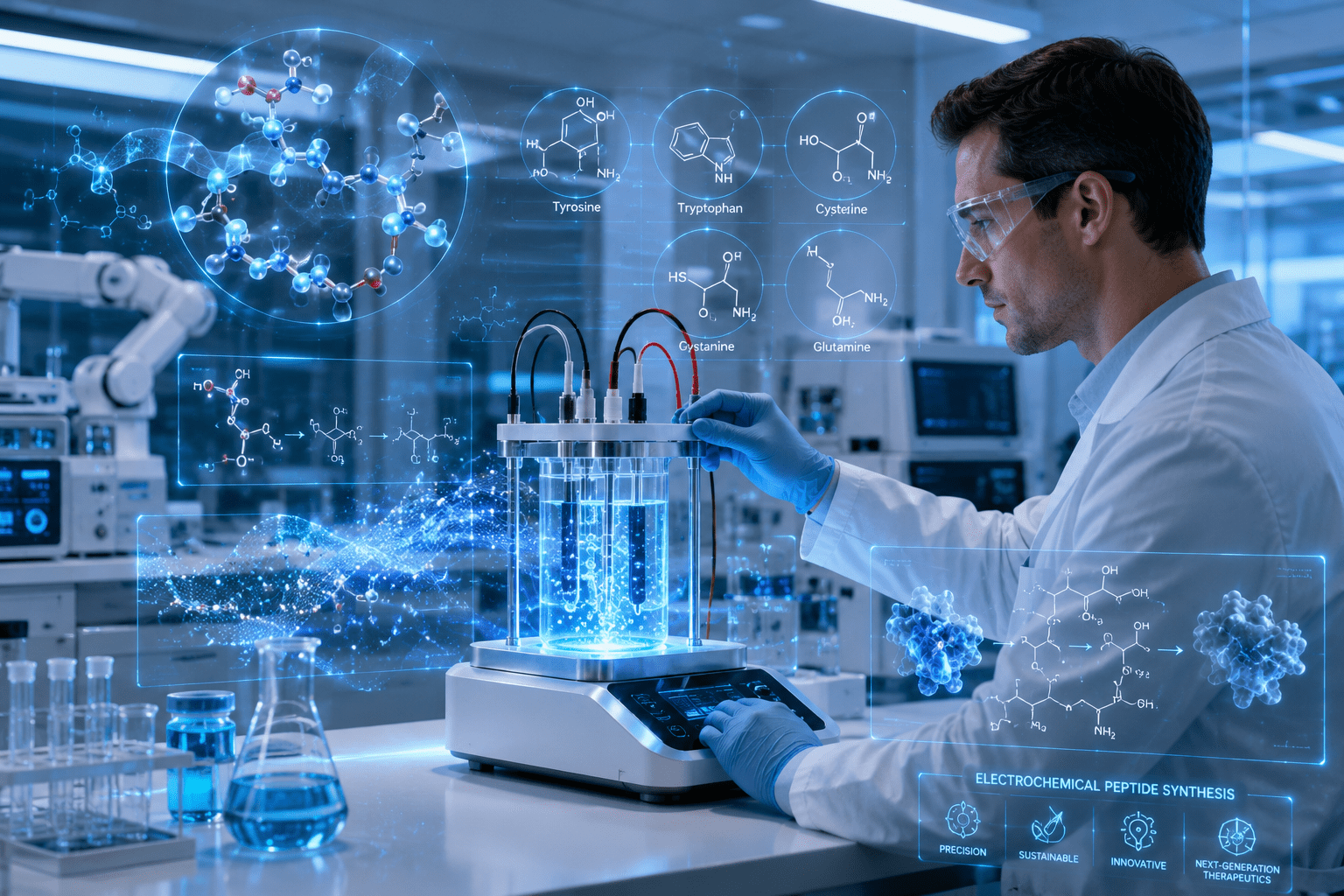
The field of peptide synthesis is undergoing a transformative phase thanks to recent advancements in electrochemical methods. These innovations are driving the creation of homogeneously modified peptides that are critical for scientific research and drug development. This article explores the breakthroughs and challenges in electrochemical peptide synthesis.
Understanding Electrochemical Peptide Synthesis
Electrochemical peptide synthesis offers a promising approach to creating bioactive peptides with precision. This method allows for the fine-tuning of reactions under mild conditions, making it an attractive choice for researchers aiming to explore the redox-active properties of various amino acids.
As Dhanya Karipal Padinjare Veedu and colleagues point out, the versatility of these electrochemical methods is expanding, enhancing their compatibility with complex peptide substrates.
Significance in Therapeutic Development
The ability to synthesize peptides with specific modifications is crucial for developing new therapeutics. These advances allow for the production of peptides with improved stability, activity, and selectivity, which are important for drug efficacy.
“Peptide research continues to evolve, offering promising insights into health and wellness,” experts say. This evolution is propelled by innovations that focus on sustainability and broad applicability.
Challenges and Future Prospects
Despite these advancements, challenges remain in maximizing the potential of electrochemical modifications. The development of universally applicable methods is essential to overcome current limitations.
Researchers are also addressing the need for sustainable practices in peptide chemistry, seeking methods that reduce environmental impact while maintaining efficiency and cost-effectiveness.
Graphical Insights and Innovations
The recent review highlights electrochemical strategies, including the modification of residues like tyrosine, tryptophan, cysteine, and glutamine. These approaches, supported by graphical representations, emphasize the method’s expanding scope and potential for future innovation.
The focus on non-canonical amino acid functionalizations offers exciting opportunities for creating peptides with novel properties, further pushing the boundaries of peptide chemistry.
In conclusion, the continuous development in electrochemical peptide synthesis is paving the way for new possibilities in scientific research and therapeutic applications. These innovations not only enhance our understanding of peptide chemistry but also hold promise for future medical breakthroughs.
The article discusses recent advancements in electrochemical peptide synthesis, focusing on their implications for drug development and research, highlighting sustainability and innovation in peptide chemistry. Electrochemical peptide synthesis, peptide drug development, sustainable peptide chemistry.
Disclaimer: The content on this website is for informational purposes only and is not intended as medical advice, diagnosis, or treatment. Always consult a qualified healthcare professional before making any health-related decisions. Images used in this article are AI-generated illustrations.