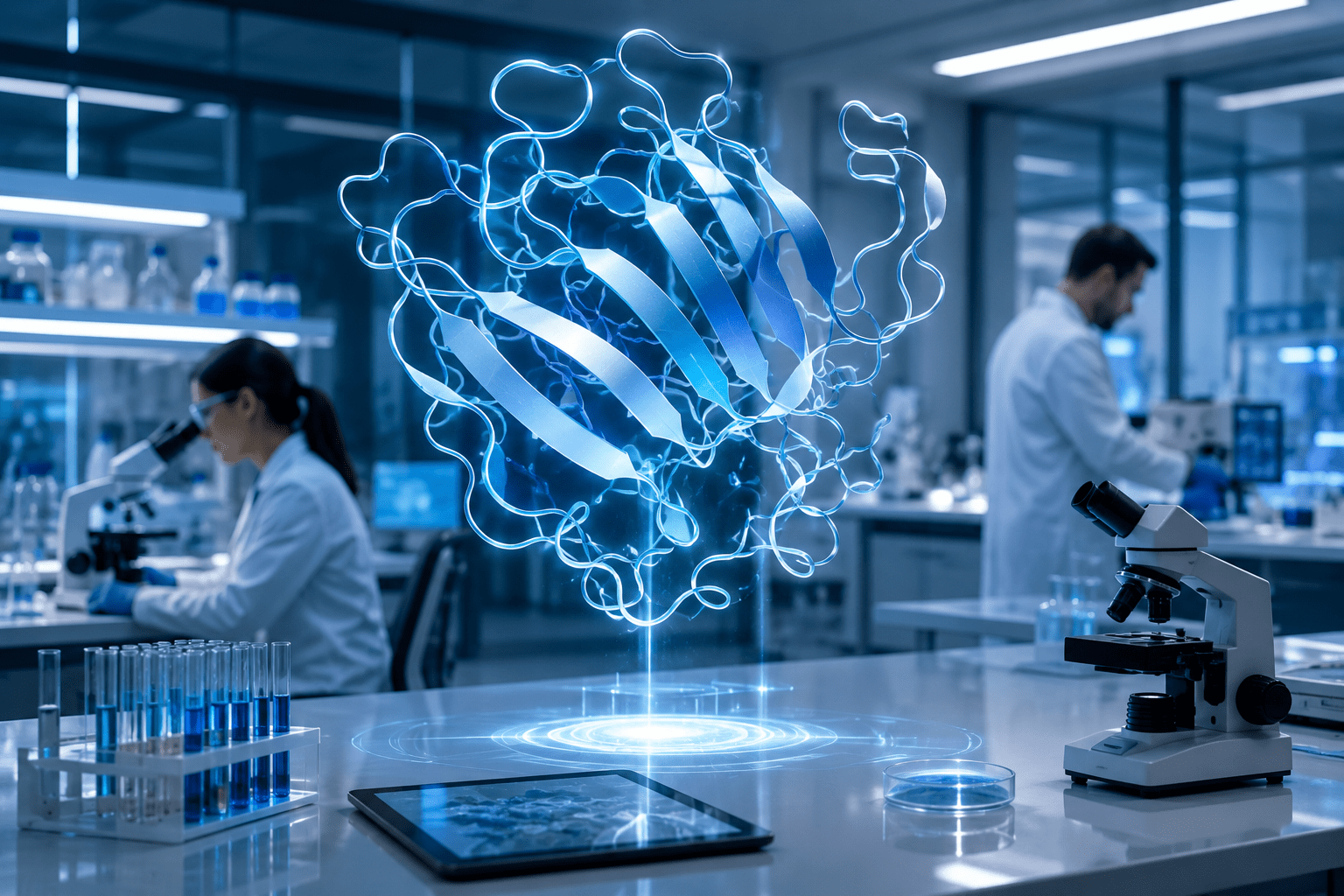
Researchers have made a significant breakthrough in protein engineering by developing innovative β-hairpin switches that offer controllable mechanical properties in biomaterials. This work, led by Gabriela Wojtan, Sofia Julin, and Robert Pylkkänen, showcases how integrating biomimetic design with advanced protein engineering can pave the way for creating next-generation adaptive materials.
The Science Behind β-Hairpin Switches
Nature exhibits remarkable mechanical properties in proteins such as fibroin and elastin due to precise β-structure formations. The researchers aimed to replicate these natural properties through de novo protein engineering, focusing on β-hairpin peptides. These peptides, when triggered, transition into a more ordered state, providing enhanced mechanical strength.
Innovative Design and Applications
The team employed deep learning and computational optimization to improve β-hairpin propensity, increasing hydrophilicity and solvent accessibility while ensuring high solubility in water. This approach allows peptides to remain disordered until exposed to an amphiphilic trigger such as sodium dodecyl sulfate (SDS), which initiates a structural transformation into a mechanically robust state.
Implications for Future Biomaterials
This research not only provides insights into β-structure formation but also introduces a scalable strategy for programming protein folding and assembly. Such materials could revolutionize the field of biomaterials by providing responsive and adaptable components suitable for various applications.
“Peptide research continues to evolve, offering promising insights into health and wellness,” experts say. The findings open doors to designing materials that can respond to environmental cues, potentially benefiting multiple industries, from medical devices to wearable technology.
Support and Acknowledgements
The study was supported by the Academy of Finland and the National Science Centre of Poland, with additional contributions from the EU project Fragment-Screen. The collaborative effort highlights the importance of international cooperation in advancing scientific frontiers.
This article explores the development of β-hairpin switches in protein engineering, highlighting their potential to create biomaterials with controllable mechanical properties. β-hairpin switches, protein engineering, adaptive biomaterials. How β-Hairpin Switches Could Change Biomaterials: Explore the protein engineering breakthrough enabling adaptability.