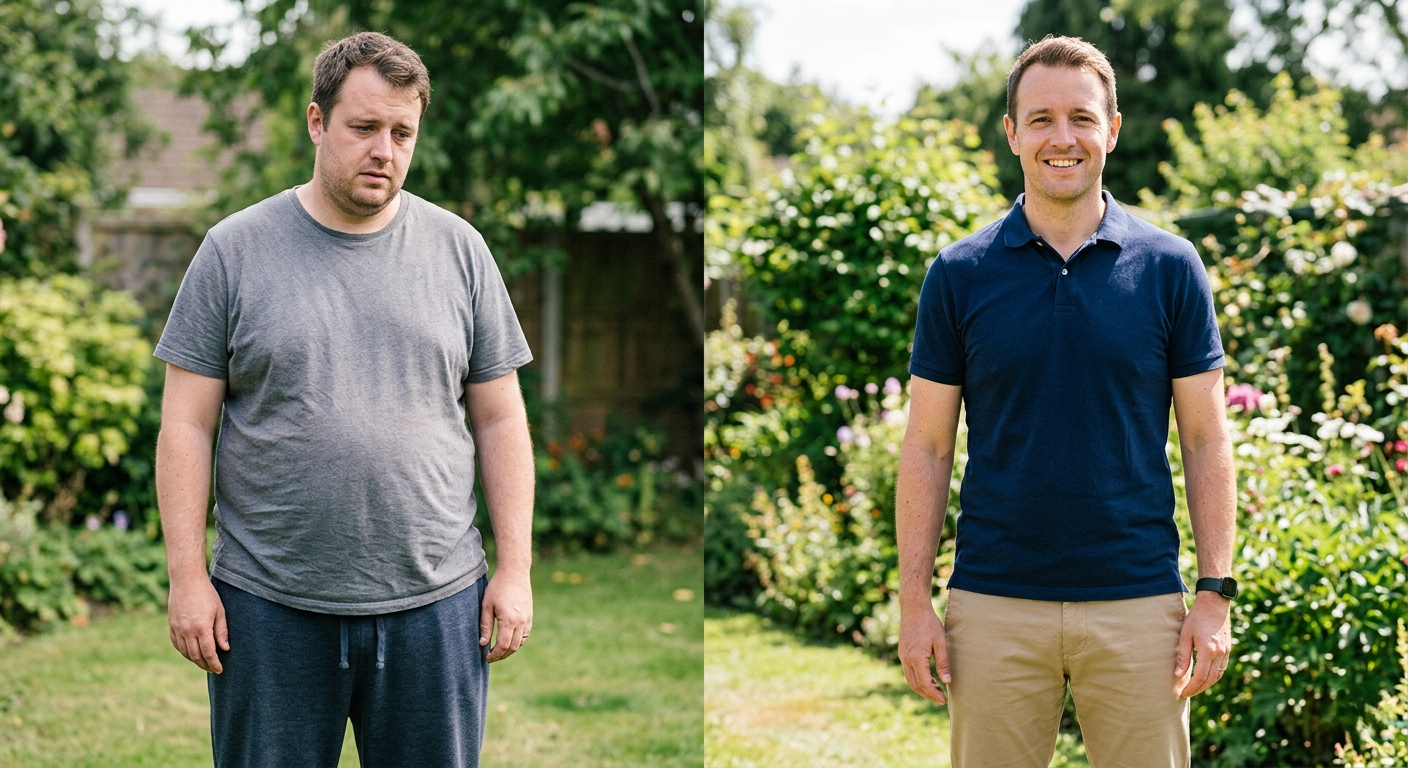
For most of his adult life, Michael Collins carried far more than just physical weight. At 56 years old, working as a mental health professional in Boaz, Alabama, his life had been shaped by a traumatic event that happened decades earlier. What started as emotional pain gradually turned into a destructive relationship with food, eventually pushing his body to dangerous limits.
At his heaviest, he weighed 526 pounds. Everyday tasks became exhausting, and his health continued to decline. A doctor’s warning that his life was at serious risk became the moment that forced him to take control. What followed was not a quick fix or a temporary diet, but a long and demanding transformation that reshaped both his body and mindset.
Trauma That Started Everything
The turning point in his life actually began when he was just 18 years old. He was involved in a devastating car accident that nearly cost him his life. While he survived, his cousin, who was extremely close to him, did not. The loss left a deep emotional scar that never properly healed.
He carried guilt for years, believing that he should have been able to save him. Even though he managed to pull both of them from the wreckage, it wasn’t enough. That feeling stayed with him, quietly shaping his behavior over time.
Instead of processing the trauma in a healthy way, he looked for something that could numb the emotional pain. Food became that escape. It provided temporary comfort and distraction, even if it was only for a short time.
Emotional Eating Turns Into Addiction
At first, eating was simply a way to cope. Over time, it turned into a habit, and eventually into something much harder to control. The pattern was simple but destructive. Whenever emotional discomfort surfaced, food became the immediate solution.
There were no restrictions or structure in his diet. If something tasted good and was available, he would eat it. Meals weren’t planned, and portion control didn’t exist. High calorie foods like burgers, fried items, and sweets became a regular part of his daily intake.
It wasn’t unusual for him to consume large amounts of food in a short time. For example, finishing an entire pizza alone and then continuing to snack afterward became normal behavior. This kind of eating pattern quickly led to rapid weight gain.
By his early twenties, his weight had already crossed 300 pounds. Instead of stabilizing, it continued to increase year after year.
Physical and Mental Decline
As his weight increased, so did the physical strain on his body. Basic movements became painful. Standing up, walking short distances, or performing simple tasks required significant effort.
Breathing became difficult, and he often experienced chest discomfort and irregular heartbeats. His body was under constant stress.
But the physical challenges were only part of the problem. The mental toll was equally damaging.
Being in public became uncomfortable. He was constantly aware of people staring, judging, or making assumptions. Situations that most people consider normal, like going to a restaurant, turned into stressful experiences. Even something as simple as fitting into a booth became a concern.
Over time, he started avoiding social situations altogether. Isolation became easier than dealing with embarrassment.
The Health Crisis That Forced Change
By the time he reached his early fifties, his condition had become critical. At 51 years old and weighing 526 pounds, he was dealing with multiple serious health issues.
High blood pressure was one of them, and it remained uncontrolled despite medication. He also developed Type 2 diabetes, with blood sugar levels consistently in a dangerous range.
Simple activities left him breathless. Walking short distances felt overwhelming. He had multiple emergency room visits because he believed he was having heart attacks.
Then came the moment that changed everything.
During a medical appointment, his doctor gave him a direct and harsh reality. His current condition was life threatening. Without significant changes, his chances of survival were extremely low. He was advised to begin insulin treatment immediately.
This recommendation hit him hard.
Resistance and Realization
The idea of starting insulin therapy wasn’t something he was willing to accept easily. He had seen family members struggle with managing diabetes through injections. The constant monitoring, the risk of complications, and the financial burden made it even more overwhelming.
Beyond that, it represented something deeper. To him, starting insulin felt like accepting defeat.
His doctor made it clear that without intervention, he might not have much time left. That moment forced him to confront reality in a way he never had before.
Leaving the doctor’s office, he realized something had to change. This was no longer about appearance or comfort. It was about survival.
Taking the First Step Toward Change
Instead of giving in, he decided to look for alternatives. Through his insurance provider, he discovered Virta Health, a program focused on managing and reversing diabetes through nutritional changes.
He applied and was accepted.
Within a couple of weeks, he began working closely with a health coach. For the first time, he started understanding how different foods affected his body, especially his blood sugar levels.
The changes began immediately.
Rebuilding His Diet
The first major step was eliminating junk food completely. Processed foods, sugary snacks, and high carbohydrate meals were removed from his routine.
Instead, his diet became structured and controlled. He started measuring his food, paying attention to portion sizes, and focusing on specific nutrient targets.
His daily approach included:
- Controlled protein intake to maintain muscle
- Very low carbohydrate intake to stabilize blood sugar
- Non starchy vegetables for nutrients
- Healthy fats for balance
A typical day looked like this:
Breakfast included eggs, a small portion of protein, and healthy fats like avocado.
Lunch focused on salads with a solid portion of protein.
Dinner included protein along with green vegetables such as broccoli or green beans.
Snacks were minimal and controlled, usually consisting of nuts or protein based options.
Rapid Health Improvements
The results came faster than expected.
Within just six weeks, he was able to stop all diabetes medications. His blood sugar levels improved significantly, and the weight started to drop.
This early success created momentum.
As the weight decreased, his body began to function better. Pain levels reduced, breathing improved, and daily movement became easier.
Introducing Physical Activity
Once he started feeling physically capable, he added movement into his routine. Walking was the starting point.
At first, even short walks required effort. But as his strength improved, he gradually increased his activity level.
When his weight dropped to around 400 pounds, he took another step forward by joining a gym.
His workouts were simple but effective:
- Walking on the treadmill
- Light weight training
- Consistent sessions several times per week
He focused on proper form rather than lifting heavy weights. The goal was to build strength safely and steadily.
Long Term Progress
In the beginning, weight loss was rapid. He was losing around five pounds per week.
During the first year, he lost approximately 120 pounds. The following year, he lost another 100 pounds.
As expected, the pace slowed down over time. This is normal in long term transformations.
By the end of 2025, his weight had dropped to around 225 pounds. In total, he lost over 300 pounds across several years.
Addressing the Mental Side
Even with physical progress, the emotional aspect could not be ignored forever.
The trauma from the accident still existed. Eventually, he decided to seek professional help.
Through therapy, he began to process what happened years earlier. One of the most important realizations was accepting that the accident was not his fault.
Letting go of guilt was not immediate, but it was necessary.
For anyone dealing with similar trauma, trying to handle everything alone usually makes things worse. Professional guidance can make a significant difference.
A New Way of Living
As his weight decreased, his confidence started to grow.
Situations that once caused anxiety became manageable. Being in public no longer felt overwhelming. He began to participate in life instead of avoiding it.
Moments that once seemed impossible became reality.
There was a time when he couldn’t walk to a nearby pond with his grandson. He had to rely on a vehicle to get there. After losing a significant amount of weight, he was finally able to walk that distance.
Not only that, he was able to run.
Pushing Beyond Limits
In 2024, he decided to challenge himself further by entering a 5K run. This was something he never imagined doing in the past.
He started the race with low expectations, unsure if he could even complete it. Instead of aiming for a specific position, his goal was simply to finish.
To his surprise, he didn’t just complete the race. He performed far better than expected, finishing ahead of many participants.
This moment proved something important. His limits were not where he once believed they were.
Giving Back and Moving Forward
After experiencing such a transformation, he chose to help others going through similar struggles. He began volunteering with Virta Health to support people trying to improve their health.
His long term goals include continuing to stay active, participating in more events, and possibly sharing his journey in greater detail through writing.
Reality of the Journey
His story highlights a few hard truths.
Weight gain is rarely just about lack of discipline. In many cases, it is tied to deeper emotional or psychological issues.
At the same time, change does not happen without effort. Progress required:
- Consistent dietary changes
- Regular physical activity
- Mental and emotional work
- Long term commitment
There were setbacks, slow periods, and challenges along the way. But quitting was not an option.
What This Actually Shows
The most important takeaway from his journey is not the exact diet or workout plan. It is the shift in mindset.
He moved from avoiding reality to facing it directly. From using food as an escape to using discipline as a tool.
His progress was not based on motivation alone. It was built on repeated actions over time.
And that’s the part most people underestimate.
Anyone can start. Very few stay consistent long enough to see real change.
His story proves that even after years of struggle, change is still possible. But it requires effort, patience, and a willingness to confront uncomfortable truths.