
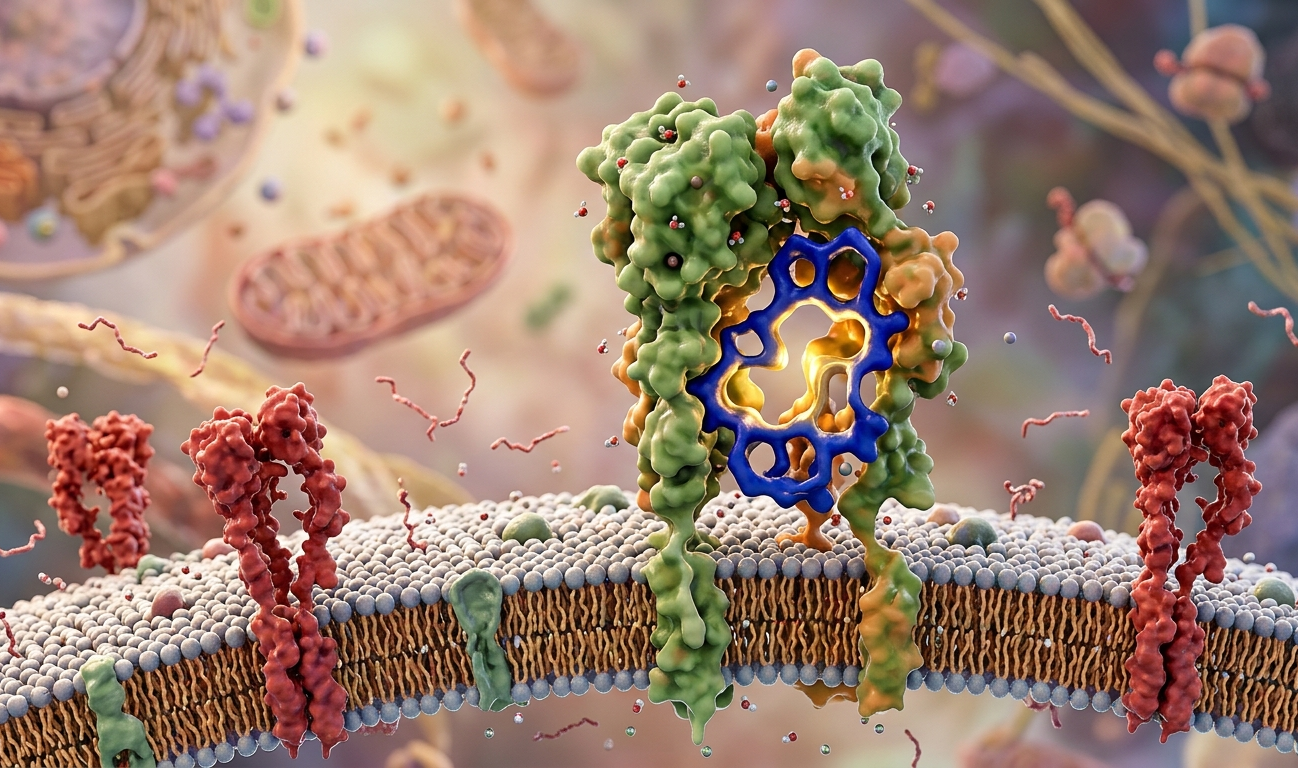
Researchers have identified a novel bicyclic peptide targeting the αvβ3 integrin, showcasing significant potential in cancer treatment. This advancement addresses the need for more effective and selective therapies in tumor-targeted treatments.
Breakthrough in Peptide Design
A team of researchers, including Haijian Yang and Hui Pan, has developed a bicyclic peptide with an unusual norArg-Gly-Asp sequence. This innovative design stands out for its high affinity and selectivity towards the integrin αvβ3, a crucial target in cancer diagnosis and therapy.
Integrins are proteins that play a significant role in cell signaling and tumor growth. Among them, αvβ3 is particularly vital due to its interaction with extracellular matrix proteins containing the RGD sequence. However, designing peptides that can specifically target αvβ3 has been challenging until now.
Research Findings and Implications
The newly identified peptide, referred to as peptide 5j, incorporates a tryptathionine bridge, enhancing its binding capabilities. In-depth molecular dynamics simulations indicate that norArg is pivotal in distinguishing between integrins αvβ3 and αIIbβ3, crucial for selective targeting.
Using peptide 5j as a ligand, the researchers developed peptide drug conjugates named P1. These conjugates demonstrated significant inhibitory effects on the A549 cell line in both in vitro and in vivo studies, suggesting promising therapeutic potential.
Potential for Precision Oncology
This discovery contributes to the growing field of precision oncology, where therapies are tailored to target specific molecular features of cancer cells. “Peptide research continues to evolve, offering promising insights into health and wellness,” experts say, underscoring the importance of ongoing research efforts in this area.
While previous integrin-targeting therapies like cilengitide have faced challenges due to pro-angiogenic effects, the novel approach with peptide 5j offers a fresh perspective. The potential to develop more effective and less harmful treatments is a significant step forward in cancer therapy.
Conclusion
This breakthrough in bicyclic peptide design not only enhances the understanding of αvβ3-targeting mechanisms but also opens new avenues for therapeutic development. As research progresses, these findings could lead to more effective treatments for various cancers, bringing hope to patients and advancing precision medicine.
The article discusses a novel bicyclic peptide targeting the αvβ3 integrin, highlighting its potential in cancer therapy through enhanced selectivity and affinity. It explores the peptide’s unique structure, research implications, and future applications in precision oncology.
Disclaimer: The content on this website is for informational purposes only and is not intended as medical advice, diagnosis, or treatment. Always consult a qualified healthcare professional before making any health-related decisions. Images used in this article are AI-generated illustrations.