
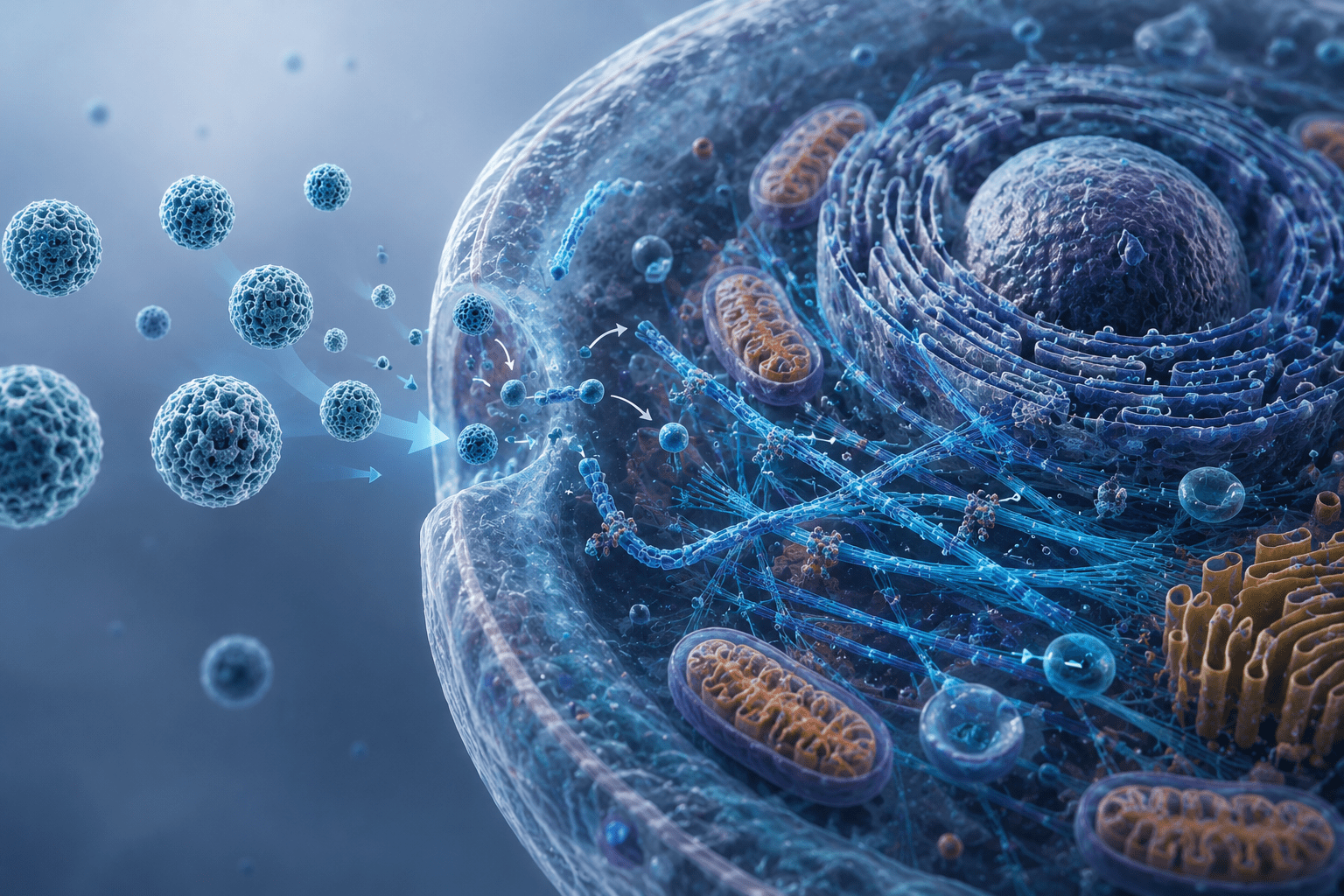
In a groundbreaking study published by Nature Chemical Biology, scientists have successfully developed a method to counteract the disruptive effects of synthetic nanoassemblies on cellular homeostasis. This research could pave the way for innovative therapeutic strategies using nanotechnology.
Understanding Cellular Homeostasis and Disruption
Cells have evolved over millions of years to maintain a delicate balance known as homeostasis, crucial for survival. However, the introduction of novel synthetic nanostructures, a product of advancing nanotechnology, poses new challenges. These structures often enter cells uncontrollably, lacking intrinsic pathways for removal, thereby leading to potential cellular dysfunction.
The Role of Peptides in Restoring Balance
In this study, a team of researchers, including Jiaqi Xing and Xiaoran Zheng, explored the use of a model photosensitizer–peptide conjugate. This innovative approach involves manipulating the peptide’s structure to undergo reversible transformations through redox cycling between methionine and methionine sulfoxide. Such changes facilitate the conversion between nanofibers and nanoparticles under light irradiation, allowing controlled cellular uptake and expulsion.
Mechanisms of Action
Upon oxidation, the peptide nanoparticles penetrate bacterial cells. These engineered bacteria, in preparation for oxidative stress, express MetO reductases. This enzymatic action reduces the internalized particles, reverting them into nanofibers, which are then expelled from the cells, effectively restoring cellular homeostasis.
“Peptide research continues to evolve, offering promising insights into health and wellness,” experts say.
Implications and Future Prospects
This study highlights the potential of linking synthetic assemblies with cellular regulatory circuits, opening new avenues for nanotechnology in medical applications. By establishing a crosstalk between supramolecular transformations and genetic responses, researchers aim to develop therapies that mitigate the adverse effects of cellular accumulation of synthetic materials.
The implications of this research extend beyond immediate clinical applications, offering a foundation for future exploration in biotic–abiotic interfaces, potentially revolutionizing how we approach cellular therapies.
Explore the groundbreaking use of synthetic peptides to restore cellular balance amid nanostructure disruption, opening new therapeutic pathways. Synthetic peptides, cellular homeostasis, nanotechnology therapy: How Peptides Could Balance Cellular Chaos. Discover the peptide approach to restoring cell health.