
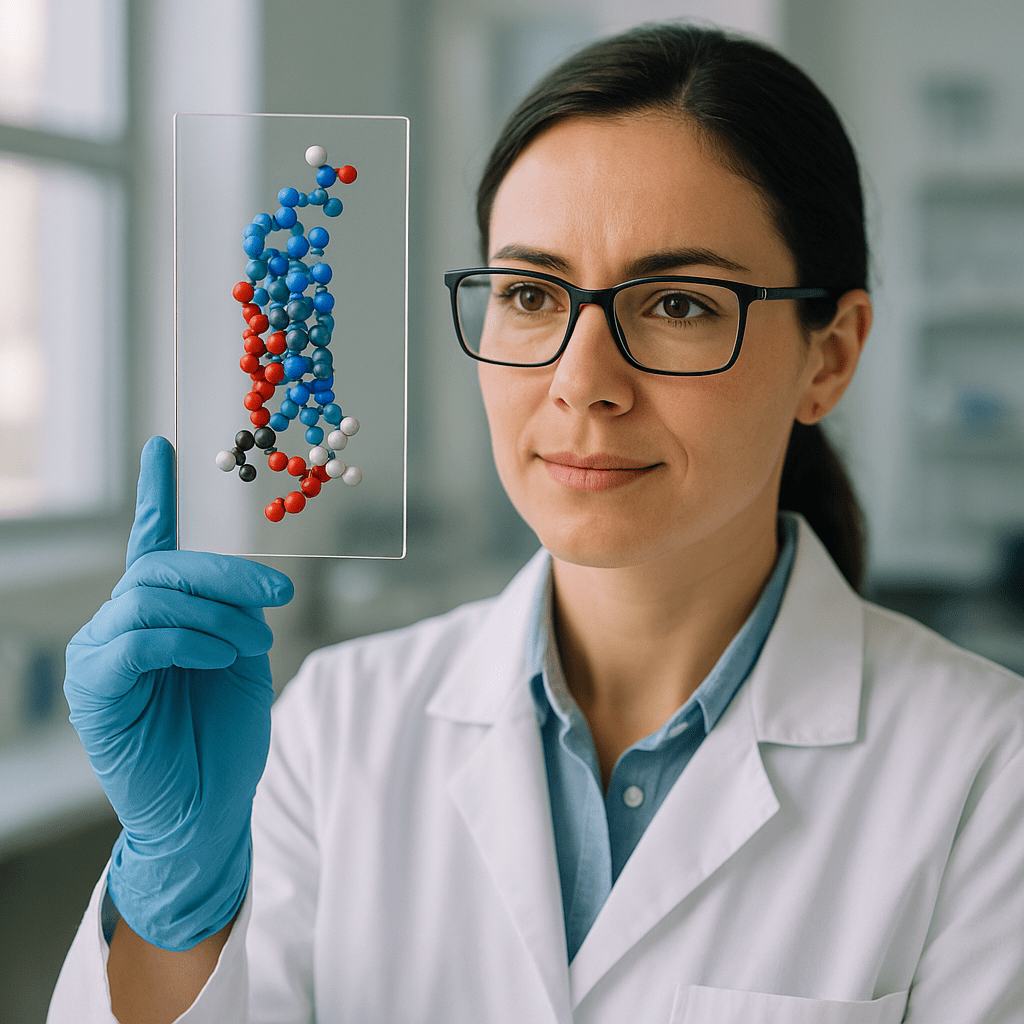
Groundbreaking research published in Nature Chemistry has unveiled a novel approach to designing potent agonists for class B1 G-protein-coupled receptors (GPCRs) using heterochiral peptide structures. This development marks a significant advancement in the understanding and manipulation of GPCRs, which play a crucial role in various physiological processes.
Revolutionizing GPCR Activation
GPCRs, particularly class B1, have long been targets for therapeutic interventions due to their involvement in conditions such as diabetes and osteoporosis. Traditional approaches have focused on maintaining the alpha-helical structure of peptides like glucagon and parathyroid hormone (PTH) to ensure efficacy. However, the recent study led by Ruslan Gibadullin and his team explored a heterochiral design strategy that challenges this norm.
Heterochiral Peptides: A New Frontier
The innovative design involves replacing conventional l-α-amino-acid residues with d-α-amino-acid residues at strategic locations within the peptide sequence. Surprisingly, these modifications did not compromise the receptor activation potency. Instead, they produced agonists that are biased against β-arrestin recruitment compared to their all-l-peptide counterparts, offering a promising direction for drug development.
Implications for Therapeutic Applications
These findings suggest that heterochiral peptides could lead to more selective and effective therapeutic agents with improved pharmacokinetic properties. For instance, the glucagon analogues developed in this study showed reduced receptor internalization, hinting at potential benefits for managing conditions like severe hypoglycemia.
Expert Insights and Future Directions
“Peptide research continues to evolve, offering promising insights into health and wellness,” experts say. The ability to manipulate peptide structures without sacrificing function could revolutionize the treatment landscape for diseases influenced by class B1 GPCRs.
As research continues, the heterochiral design strategy may extend beyond glucagon and PTH analogues, potentially impacting a wider range of hormone-based therapies. This approach not only enhances our understanding of peptide-receptor interactions but also opens doors to more versatile and targeted drug development.
This article explores the innovative use of heterochiral peptide designs to enhance GPCR activation, presenting significant advancements in drug development for conditions like diabetes and osteoporosis. heterochiral peptides, GPCR activation, peptide drug development.
Disclaimer: The content on this website is for informational purposes only and is not intended as medical advice, diagnosis, or treatment. Always consult a qualified healthcare professional before making any health-related decisions. Images used in this article are AI-generated illustrations.