A groundbreaking study published in Nature Chemical Biology on January 13, 2026, uncovers the mechanisms through which lactate drives cancer progression. Researchers have identified a novel positive feedback loop involving GCN5 and ERK that intensifies tumor development, offering new insights for potential therapeutic interventions.
The Lactate Connection
Lactate, a byproduct of the Warburg effect, is known to promote cancer progression, but its exact role has remained elusive. In this study, scientists discovered that lactate activates the MAPK pathway via ERK lactylation, a process crucial for tumor growth. This revelation highlights how metabolic changes can drive cancer, underscoring the significance of lactate beyond its traditional biochemical roles.
GCN5 and ERK: A Synergistic Duo
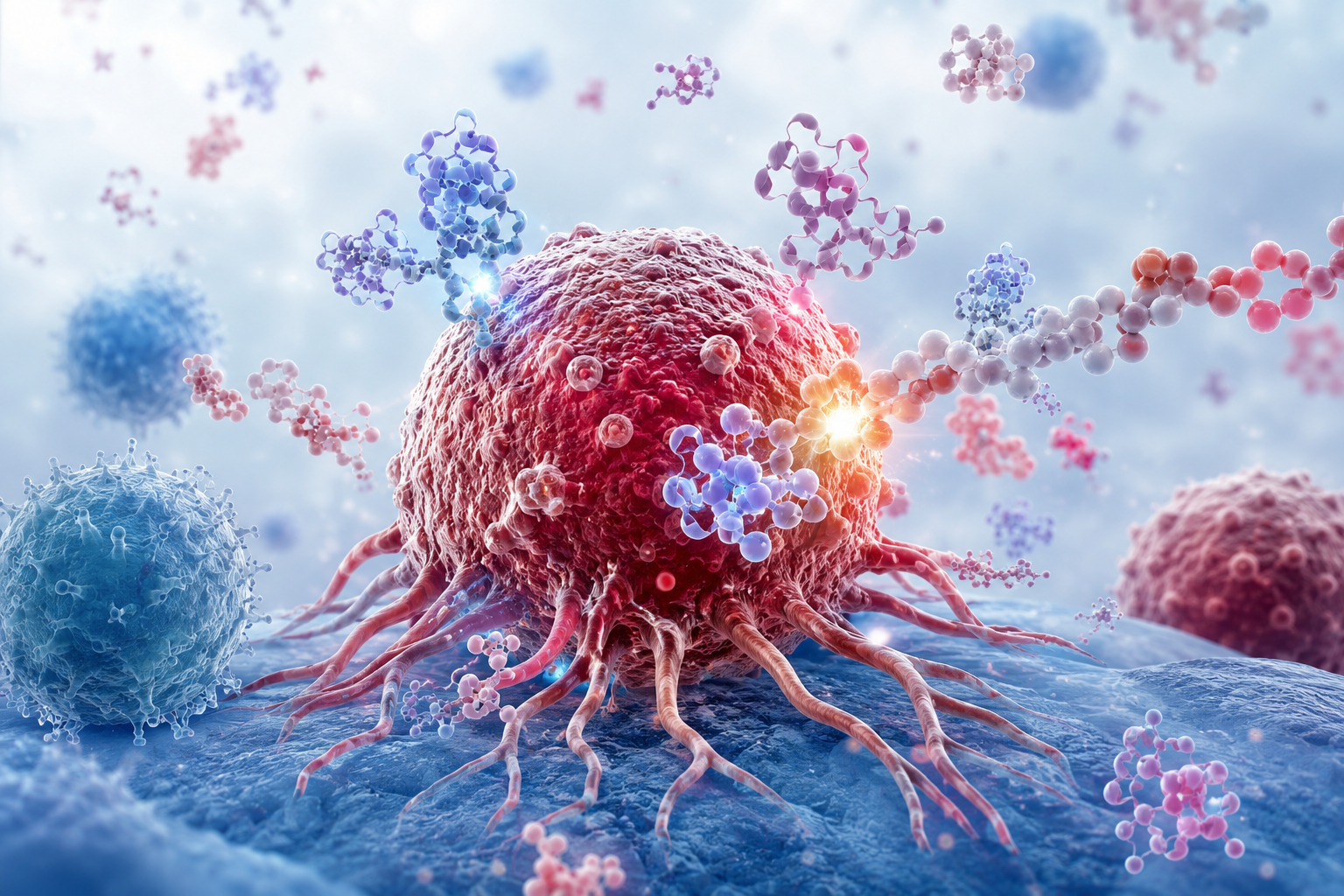
The research identifies GCN5 as the lactyltransferase responsible for ERK lactylation. When ERK is activated, it phosphorylates GCN5, which in turn enhances its lactyltransferase activity towards ERK. This creates a positive feedback loop that accelerates cancer progression. The study reveals that lactylation of ERK at the residue K231 weakens its interaction with MEK, promoting ERK dimerization and activation.
Targeting ERK Lactylation
Researchers have developed a cell-penetrating peptide that specifically inhibits ERK lactylation, showing promise in impeding tumor growth, especially in KRAS-mutant cancer models. “Peptide research continues to evolve, offering promising insights into health and wellness,” experts say. This approach could lead to new cancer therapies by disrupting the ERK-GCN5 loop, potentially improving patient outcomes.
Implications for Cancer Therapy
The study’s findings offer a new perspective on targeting RAS–ERK-driven cancers. By interfering with the lactylation process, it might be possible to hinder cancer progression and increase chemosensitivity, providing a new avenue for therapeutic development. The integration of peptides into this process further exemplifies the potential of peptide-based treatments in modern oncology.
This research not only advances our understanding of cancer biology but also opens up new possibilities for treatment strategies. As the field of peptide research grows, it paves the way for innovative solutions in combating cancer and improving health outcomes.
This post explores the discovery of a feedback loop between GCN5 and ERK, driven by lactate, and its implications for cancer progression and potential therapies involving peptides.
Disclaimer: The content on this website is for informational purposes only and is not intended as medical advice, diagnosis, or treatment. Always consult a qualified healthcare professional before making any health-related decisions. Images used in this article are AI-generated illustrations.