Marine mussels are renowned for their remarkable ability to adhere to wet, slippery surfaces, thanks to their unique glue. Recent research sheds light on how this underwater glue functions, revealing the critical role of histidine-rich peptides in its formation and performance.
The Mussel Adhesion Mechanism
For decades, scientists have studied mussel adhesion, primarily focusing on a modified amino acid called 3,4-dihydroxyphenylalanine (DOPA). While DOPA has been key to understanding mussel glue, it alone cannot fully replicate the adhesive power found in nature.
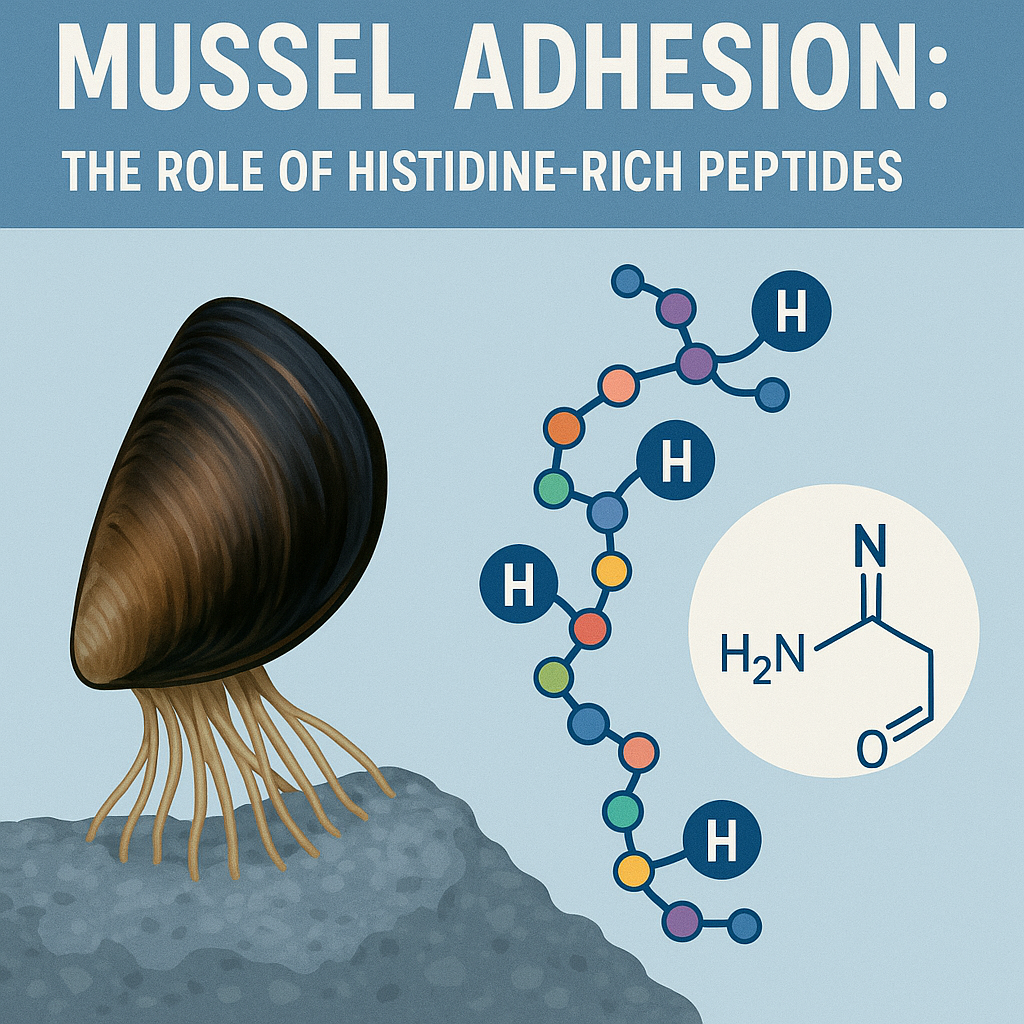
In a recent study published in Nature Communications, researchers discovered that a heretofore underappreciated protein, histidine-rich mefp-12, is essential for mussel glue’s stability and effectiveness. The protein forms part of the mussel’s secretory glands and plays a pivotal role in glue formation and curing.
The Role of Histidine-Rich Peptides
Histidine-rich peptides, like mefp-12, are capable of self-assembly in the presence of zinc, a key factor in the curing process of mussel glue. The study utilized AI-assisted modeling to predict that these peptides adopt a zinc-stabilized coiled coil conformation, similar to zinc-finger motifs found in other biological contexts.
“Peptide research continues to evolve, offering promising insights into health and wellness,” experts say, highlighting the potential applications of these findings beyond marine biology.
Implications for Synthetic Adhesives
The insights gained from this research challenge the DOPA-centric view of mussel adhesion. The findings suggest that histidine-rich peptides might inspire the design of bio-inspired adhesives that function effectively in wet environments, which has significant implications for both industrial and medical applications.
By understanding the molecular mechanisms underpinning mussel adhesion, scientists hope to design new materials that mimic these natural processes, offering potential advancements in the development of sustainable, high-performance adhesives.
Conclusion
This breakthrough research emphasizes the complexity of natural adhesion mechanisms and the potential of bio-inspired innovation. As scientists continue to explore the multifaceted roles of peptides, new opportunities for technological advancement are likely to arise, revolutionizing how we approach adhesion technologies.
The article explores recent research uncovering the vital role of histidine-rich peptides in mussel adhesion, highlighting potential applications in developing innovative synthetic adhesives.
Disclaimer: The content on this website is for informational purposes only and is not intended as medical advice, diagnosis, or treatment. Always consult a qualified healthcare professional before making any health-related decisions. Images used in this article are AI-generated illustrations.